
Running a Sex Offender Check in Plumas County
The California Megan's Law Website is the official public channel for Plumas County registry searches. California DOJ maintains the statewide registry and discloses the subset of information authorized by Penal Code section 290.46. The public site is designed for community awareness and family safety, not as a complete record of every conviction or every person who must register.
Begin with the location you want to understand. A county filter gives broad Plumas County context; a city, ZIP, address, or radius search can narrow the view. A name search is useful only when the person is already known. Always read the portal disclaimer before relying on map symbols or a profile.
Entering the Plumas County Megan's Law Site
The public portal places its conditions of use before the search controls. That entry screen matters because it sets the safety purpose and limits that govern every result.
The official Megan's Law entry page presents the public disclaimer.
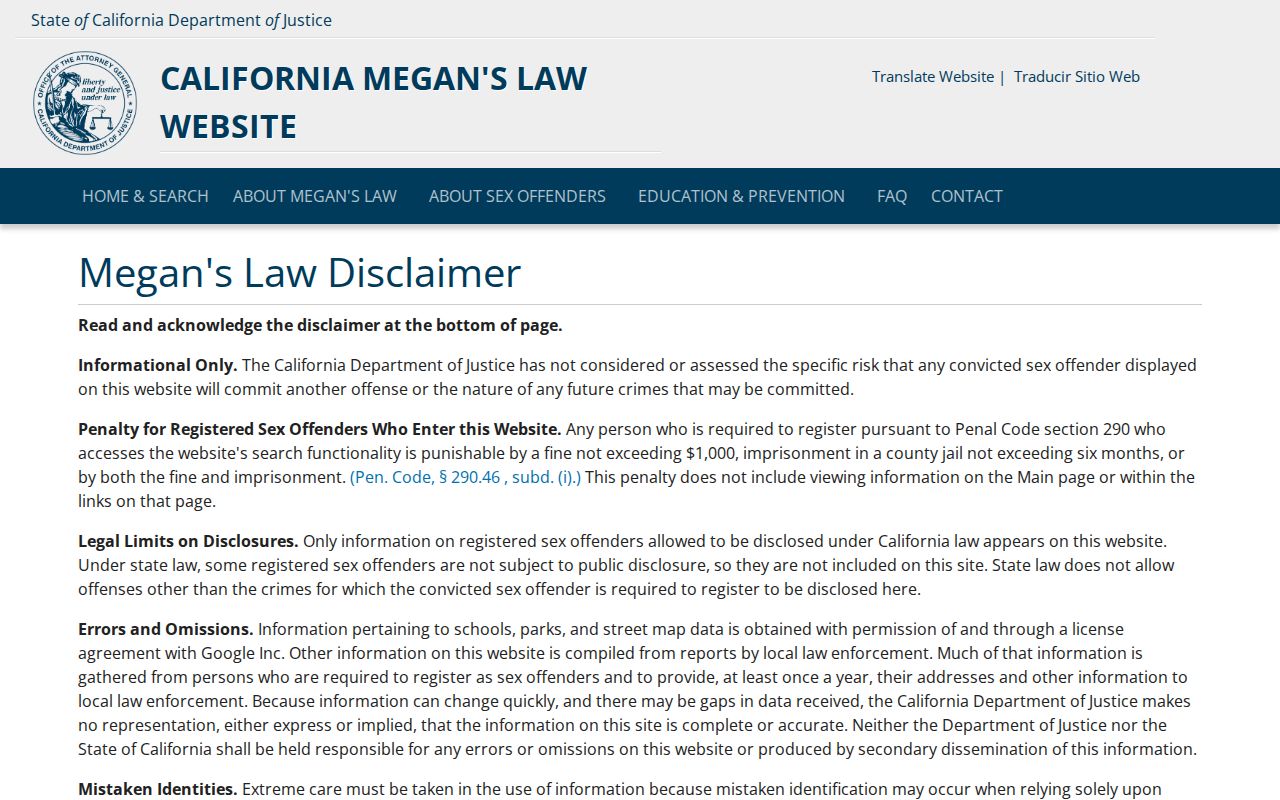
Accepting the conditions opens the search tools; it does not grant permission to republish, threaten, or target a listed person.
Searching the California Megan's Law Website
California DOJ supplies several ways to search Plumas County without gathering private identities. Use the least broad field that answers the safety question, then compare the result with the profile details shown by the state.
- Open the official portal and review and accept its disclaimer.
- Choose name, city, ZIP, county, or address and radius criteria. Select Plumas County when a countywide view is needed.
- Review the map or list and avoid assuming that a nearby marker identifies a specific household without opening the lawful public profile.
- Open a result, compare the public physical and offense details, and return to DOJ or the registering agency when a status needs clarification.
| Field | Type | Required | Use |
|---|---|---|---|
| Disclaimer acceptance | Button or checkbox | Yes | Required before public searching |
| Name | Text | No | Looks for a known registrant |
| Address and radius | Address/map | No | Looks around a location |
| City | Text or selection | No | Narrows results to a community |
| ZIP Code | Text | No | Narrows results by postal area |
| County | Dropdown | No | Select Plumas County |
| Map or list view | Display control | No | Changes how results are reviewed |
Plumas County Registry vs Criminal History
A Megan's Law result answers one limited question: whether California law permits a registrant's information to appear on the public website. It does not search all Plumas County arrests, all Superior Court cases, or a person's full California DOJ record. Some registrants may remain subject to registration while excluded from Internet disclosure.
| Registry search | Criminal-history channel |
|---|---|
| Public safety disclosure under PC 290.46 | Court cases or a subject-only DOJ Live Scan review |
| Shows authorized registrant profile fields | Shows filed court events or the subject's fingerprint-linked state record |
| May omit a person who still registers | Has separate sealing, confidentiality, and access rules |
For broader county record routes, use the Plumas County criminal-history overview and keep registry facts separate.
What a Plumas County Registry Profile Shows
The exact public fields depend on California disclosure law and the profile. Do not copy private details into a new list. Read the state display in context and verify status through official channels.
| Name and aliases | Public identity fields shown by the registry. |
|---|---|
| Photograph and description | A public photo, physical traits, and possibly scars, marks, or tattoos when displayed. |
| Address display | The address or geographic level that law permits the site to disclose. |
| Offense information | Public statute and conviction or adjudication details. |
| Tier or risk data | Tier or assessment information when the public profile provides it. |
| Registration status | Compliance or registration information made public by DOJ. |
| Other fields | Vehicle, school, employer, or internet information only when lawfully displayed. |
| Internet exclusion | A person may qualify for exclusion from public Internet disclosure yet remain required to register. |
Plumas County Registration Office
Registrants report to the law-enforcement agency with jurisdiction. Outside Portola city limits, the documented local contact is the Plumas County Sheriff's Office at 1400 East Main Street, Quincy, telephone (530) 283-6375. Portola residents should confirm whether Portola Police or the sheriff handles registration before appearing because no city registration page was retrieved.
Plumas County Sheriff's Office
1400 East Main Street
Quincy, CA 95971
(530) 283-6375
County registration contact outside Portola; call first to confirm procedure and hours.
DOJ also directs covered internet-identifier updates to the law-enforcement agency or agencies where the person registers, by mail within 30 working days. The form is not sent to DOJ.
How DOJ Frames Plumas County Disclosure
California DOJ describes Megan's Law as a way for local communities to protect themselves and their children. The program supports accurate, timely information for law enforcement and the public while local agencies monitor registration duties.
The DOJ Megan's Law explanation connects the public site to Penal Code section 290.46.
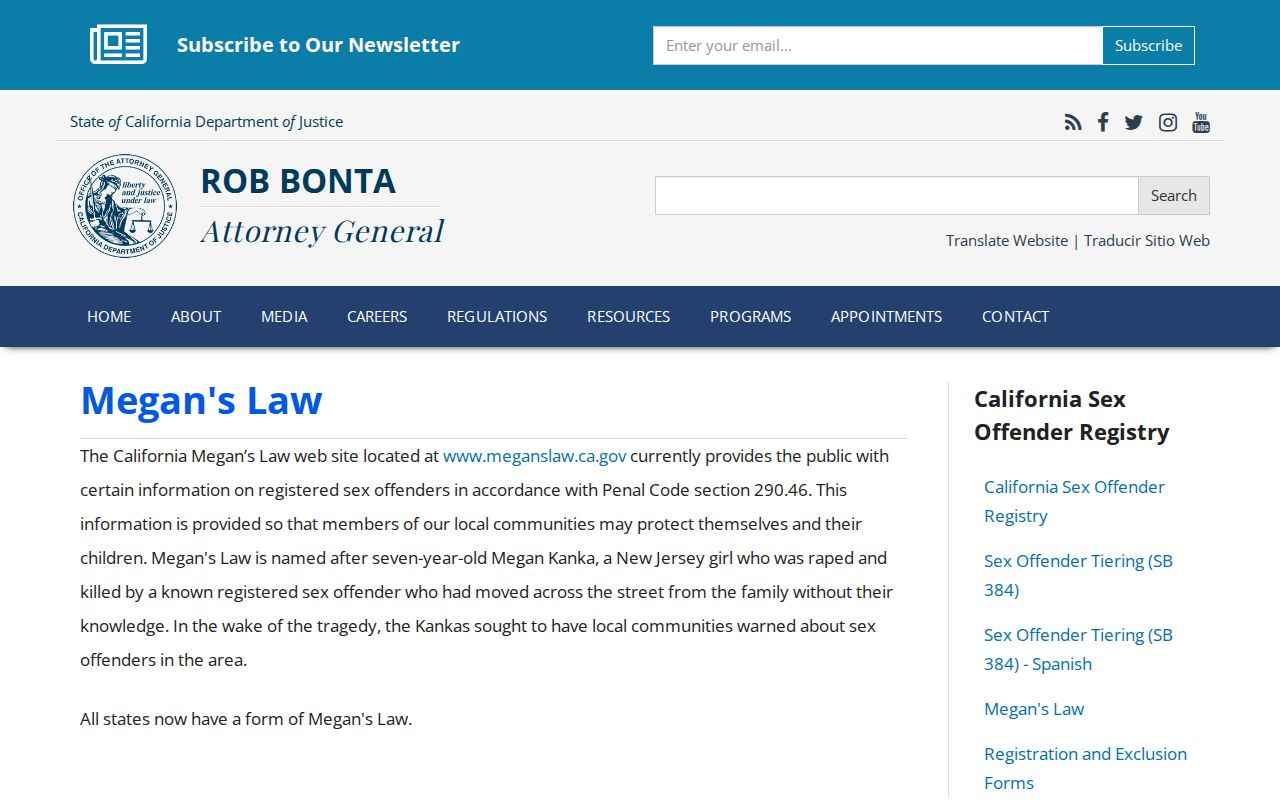
That purpose supports informed safety planning, not retaliation or a substitute for direct police help during an emergency.
Registration Requirements and Levels in California
California's SB 384 tier structure sets minimum registration periods, but public Internet visibility is a separate question. The DOJ FAQ and California Courts relief materials document the following minimum periods.
| Category | Minimum period | Public visibility |
|---|---|---|
| Adult Tier One | 10 years | Controlled separately by disclosure law |
| Adult Tier Two | 20 years | Controlled separately by disclosure law |
| Adult Tier Three, risk-assessment category | 20 years with added criteria | Controlled separately by disclosure law |
| Adult Tier Three | Lifetime | Controlled separately by disclosure law |
| Juvenile Tier One | 5 years | Controlled separately by disclosure law |
| Juvenile Tier Two | 10 years | Controlled separately by disclosure law |
A minimum period does not mean automatic removal on that date. Eligible people use the court process for relief, and the local registering agency remains central to current duties and notices.
Registry and Plumas County Supervision
Registration is not the same as probation or parole. The Plumas County Probation Department supervises adults and juveniles placed on county probation by the court. CDCR's Division of Adult Parole Operations handles state parole. A person can have registration duties without being on either form of supervision.
The county Probation page identifies its local supervision role and programs.
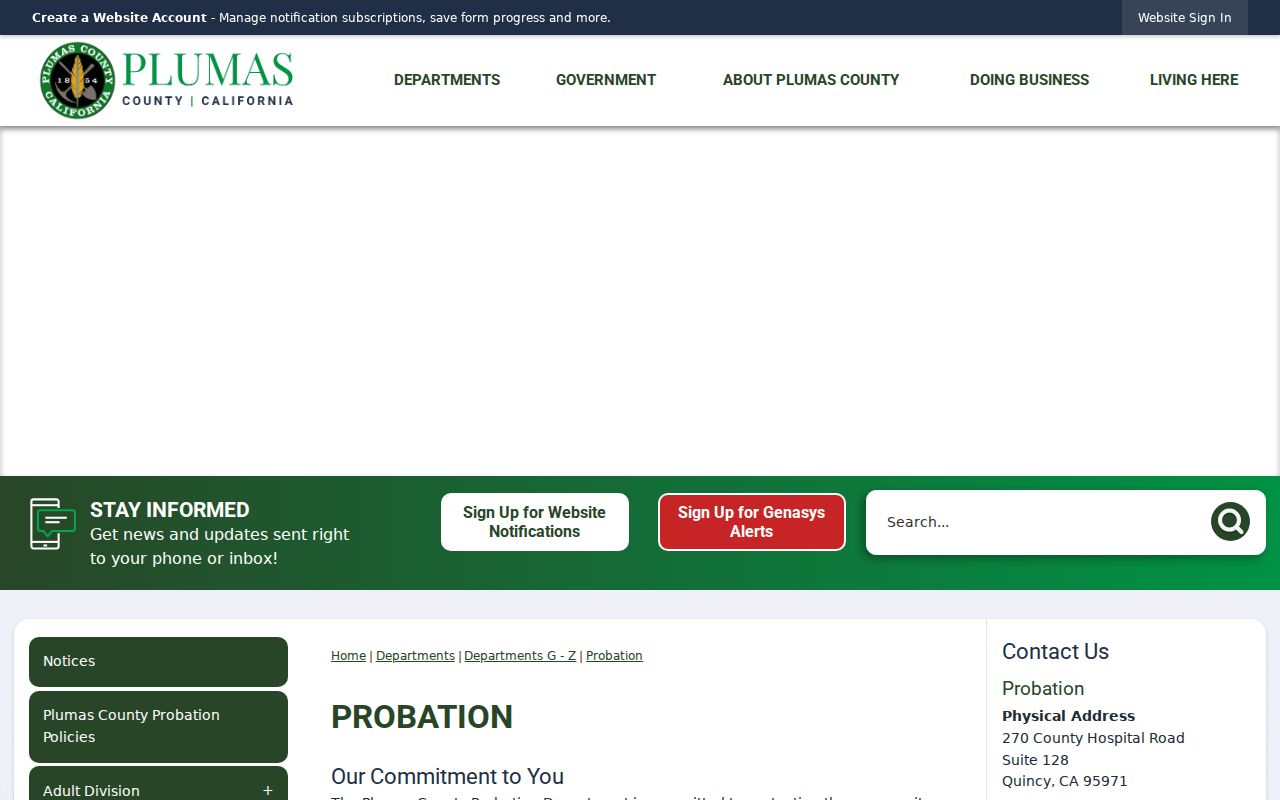
For a public registry question, use Megan's Law or the registering agency. For a sentencing or supervision question, use the court, Probation, or CDCR as appropriate.
Reporting Plumas County Registration Concerns
Possible noncompliance should be reported, not investigated by a private person. Contact the registering law-enforcement agency. For county jurisdiction, call the Plumas County Sheriff's Office; for a matter within Portola, contact local police and confirm the responsible registration office. The sheriff's non-emergency dispatch number is (530) 283-6300. Call 911 for an emergency.
Give the agency the public profile or location fact that raised concern, without confronting anyone or publishing a home address. Law enforcement can compare the report with nonpublic registration records and determine whether action is needed.
Lawful Use and Community Notification
Use Plumas County registry information to make calm, lawful safety choices: review a route, discuss boundaries with children, or contact law enforcement about a concrete concern. A map marker does not authorize surveillance, confrontation, or harm. Penal Code section 290.46 controls public disclosure and restricts misuse.
Misuse is a crime: California Penal Code section 290.46 prohibits using registry information to commit a crime or to harass a registrant or their household. Threats, stalking, vandalism, vigilantism, and unlawful discrimination are not lawful community notification.
Verify information on the official state portal and take urgent safety concerns to law enforcement. Community awareness works best when it respects both the statute and the limits of the public record.